You’ve been using the same terminal blocks, circuit breakers, fuse holders and industrial electrical components for years. They work. You’re comfortable with them. So why change? Maybe you don’t need to. But shouldn’t you at least know what your alternatives are? In our industry, brand loyalty is strong. Engineers specify what they know, purchasing departments…
The Right Components. The Right Solutions. The Right Partner.
When you’re designing equipment, building control panels, or integrating industrial systems, having the right electrical components is essential. But having the right supplier can make all the difference. At American Electrical, Inc., we focus on three key areas: 🔹 CONNECTION — Terminal blocks, DIN rail, contactors, disconnect switches, interface modules, relays, power supplies, and small…

START ME UP!
When it comes to controlling motors and other high-current loads, the contactor is one of the workhorses of an industrial control panel. A contactor allows a relatively low-power control signal to safely switch a much larger electrical load … turning motors, pumps, fans, lighting, heaters and other equipment on and off. Simple job. Important component….
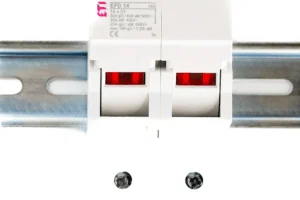
Your Fuse Holder Should Do More Than Hold a Fuse
A fuse holder has a pretty simple job, right? Hold the fuse. But a well-designed fuse holder can do two important jobs in a control panel. 1️⃣ Finger Safety Finger-safe fuse holders help protect maintenance personnel from accidental contact with energized components when servicing the panel. That’s a big improvement over exposed fuse terminals. 2️⃣…
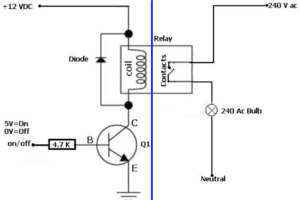
Relays: The Silent Workhorses of Industrial Automation
Some of the most important components in an industrial control panel are also the ones that receive the least attention. The relay is a perfect example. A relay doesn’t power the machine. It doesn’t run the PLC. It doesn’t display alarms or operator messages. Yet every day, it quietly switches loads, isolates control circuits, protects…

What 40 Years in the Electrical Industry Has Taught Me
After 40 years in the Industrial Electrical business, I’ve learned something important: The best salespeople don’t really sell The people who succeed long term in this Industry are usually the ones who: ✔ answer the phone ✔ solve problems ✔ follow up ✔ know the products ✔ understand the application ✔ and help customers when…

The Hidden Cost of Oversized Components
One of the most valuable assets inside a control panel isn’t the PLC. It’s not the power supply. It’s not even the wire. It’s the space along the DIN rail. And that space is for sale. Every millimeter you consume has a cost. Yet many panel designs waste valuable DIN rail space by using components…
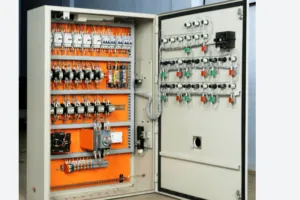
The 5-Minute Decisions That Add Hours to Your Panel Build
“Most delays in a panel build don’t happen during the build.” They happen before it even starts. I’ve seen it over and over, a quick decision made in 5 minutes ends up costing hours later on the shop floor. Here’s where it usually goes wrong: 🔧 Wrong Terminal Block Choice Using outdated or non-functional ‘efficient’…
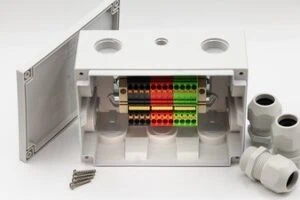
Introducing the New Signal Jumper Box from American Electrical, Inc.
We’re excited to introduce a new addition to the AEI lineup: the SIG JB-12 Signal Jumper Box It’s designed to make field wiring faster, cleaner, and more organized. Inside the box are three sets of 4 PRD 2.5 top entry push-in terminals, each jumpered to create three separate common blocks. This makes it easy to…

Where Electrical Panels Quietly Bleed Money
Most electrical projects don’t go over budget because of one big mistake. They bleed money in small, overlooked decisions. After years in this industry, here’s where we consistently see panels get more expensive than they need to be: 1️⃣ Overspec’d Protection Using larger breakers or components “just to be safe” sounds smart but it increases…