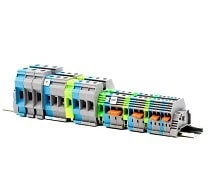
Think about the millions of wire nuts installed every year. Homes. Commercial buildings. Industrial applications. They’re one of the most widely accepted connection methods in the electrical industry. And when contractors buy wire nuts, the conversation is usually pretty simple: Nobody insists there is only one acceptable wire nut manufacturer. Now compare that to DIN…
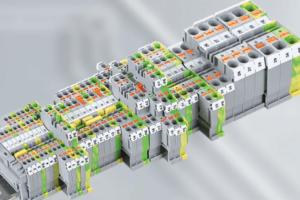
Why Push-In Terminal Blocks Continue to Gain Popularity
One of the biggest trends we’ve seen in recent years is the growing adoption of push-in terminal block technology. And honestly, it’s not difficult to understand why. Manufacturers, OEMs, and panel builders are under constant pressure to: ⚡ Reduce labor time ⚡ Increase consistency ⚡ Improve panel density ⚡ Simplify assembly ⚡ Reduce rework Connection…
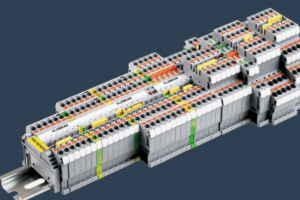
Why OEMs Are Switching to Push-In Terminal Blocks
In panel building, time is everything. And one of the biggest time drains? Terminations. That’s why more builders are moving to Klemsan PRD push-in terminal blocks (UL94-V0). ⏱️ Faster Installs With traditional screw terminals: Insert wire Check to see if it’s in the clamp (for real) Tighten Check torque, pull on wire With push-in: ➡️…
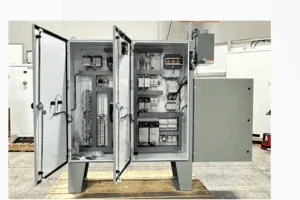
DIN Rail Density: Why Millimeters Matter More Than You Think
In control panel design, space is more than a convenience, it’s a constraint that affects accessibility, future expansion and more importantly, costs. Choosing compact DIN Rail mounted components can free up valuable rail space, improve airflow, and simplify wiring and servicing. A few millimeters saved on each device adds up quickly $$ in high-density panels…
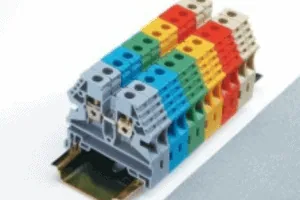
Colored Terminal Blocks: What They Mean and Why Engineers Use Them
In complex electrical panels, clarity and safety are everything. That’s where colored terminal blocks come in. Rather than using identical-looking blocks for every connection, engineers can specify color-coded terminal blocks to instantly differentiate wiring functions—improving organization, reducing errors, and enhancing safety during installation and maintenance. 🔧 What Do the Colors Represent? While color conventions can…
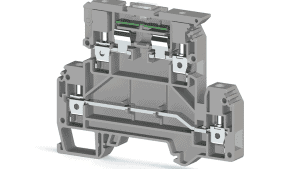
Terminate and Protect Your Control Loop with One Terminal Block
Imagine being able to land your control loop on one 6mm terminal block! Then think about the space savings that would add up in high I/O count systems! Introducing the AVK Series Double Deck Fused Disconnect Terminal Block by Klemsan – the space-saving, ultra-slim 6mm wide block with powerful functionality. This block allows you to…
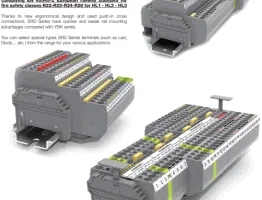
New Tension Clamp Terminal Blocks Can Take The Heat
American Electrical Inc.’s (AEI) new SRD series tension clamp style terminal blocks by Klemsan are rated non-burning – UL 94 V0! For some customers, that’s a requirement and we’re happy to provide a high quality tension clamp terminal !!! Simply open the clamp with a screwdriver and push the wire in – to remove a…
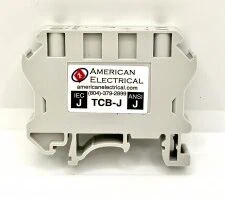
Thermocouple Terminal Blocks Support Signal Integrity
American Electrical, Inc. (AEI) offers two versions of DIN Rail mounted thermocouple terminal blocks – Type J and Type K. The unique feature of the block is that a multimeter can be plugged into the top of the device, allowing the technician to read the process temperature directly (or inject an analog signal) while not…
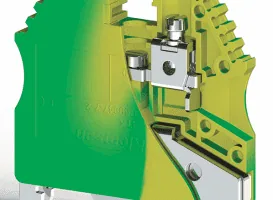
Down to Earth: Grounding Made Easy
Have you ever seen a design where there were multiple ground runs to an exposed busbar or groundbar in the bottom of the enclosure? Those green wires running all over the control panel making their way to the copper bar? Do you have a legacy system that makes similar runs and needs an upgrade? There’s…
Using Colored Terminal Blocks Can Enhance Your Design
Colored terminal blocks are used in electrical and electronic applications for a variety of practical reasons. Here are four key reasons to use colored terminal blocks: Improved Organization and Identification: Colored terminal blocks help in easily identifying different circuits, wires, or components. By using different colors for different functions or voltage levels, technicians and engineers…